

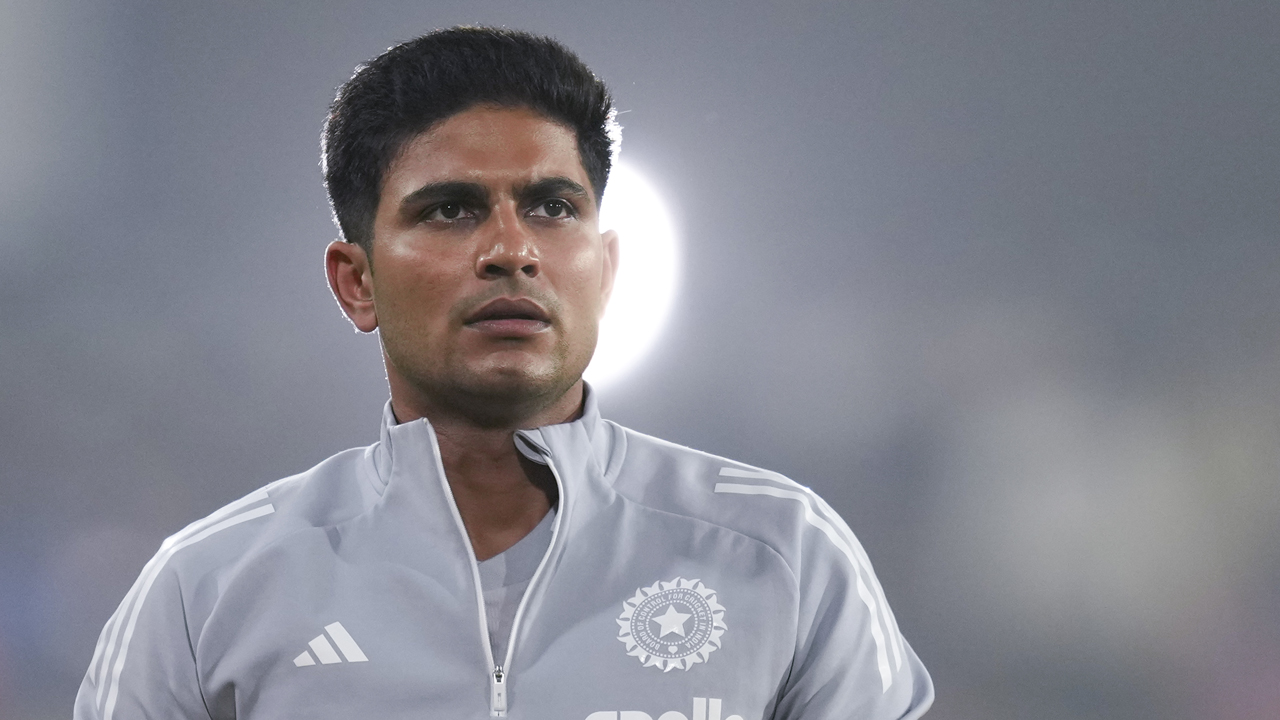
Details on the injury he sustained during India’s opening innings against South Africa in the Kolkata Test have been disclosed by India Test skipper Shubman Gill. Shubman Gill had just returned to his position after sweeping a ball for four when he suddenly felt pain in his neck, causing him to quit injured.
He was sidelined for the rest of the Test, the second Test in Guwahati, and the ensuing ODI series due to the injury. Since then, Shubman Gill has recovered and returned to the Indian team for the current Twenty20 International series against the Proteas.
“I’m doing just fine. My body feels great. After spending some time at the COE, I feel completely prepared both intellectually and physically. I was experiencing nerve pain due to a sort of disc bulging in my neck. Before the show began in the morning, I got a little cramp when I went there. Additionally, I believe I suffered a neck strain and a bulge throughout the game, which affected my nerves.
Shubman Gill was described by The Indian Express as saying, “I had to spend a few days in the hospital, but I recovered well after that.”
Shubman Gill, who is still recovering from his injury, watched from the sidelines as India lost to South Africa 0–2 in the Test series, their second straight home loss following a 0–3 loss to New Zealand the previous year. Gill acknowledged that the Test matches did not go as planned after considering the setbacks. In order to gain momentum before the forthcoming T20 World Cup, he continued, the team is currently concentrated on winning the T20I series.
“Obviously, my team’s performance in the Test matches wasn’t what we had hoped for. However, I believe we performed admirably in the one-dayers, and I hope we can finish the T20s here. We have ten Twenty20 matches left before the World Cup begins, so hopefully we’ll find our rhythm, momentum, and the style of play we want to play there,” Shubman Gill stated.
“Any team going into the World Cup wants to aim for momentum. Aside from that, identifying the appropriate combinations on various surfaces that we may encounter throughout the World Cup. We might have the opportunity to play on certain grounds or surfaces where there will be a lot of dew or on some where there won’t be much. Therefore, the key for us would be to find the appropriate combinations for those scenarios,” he continued.








 Home
Home