

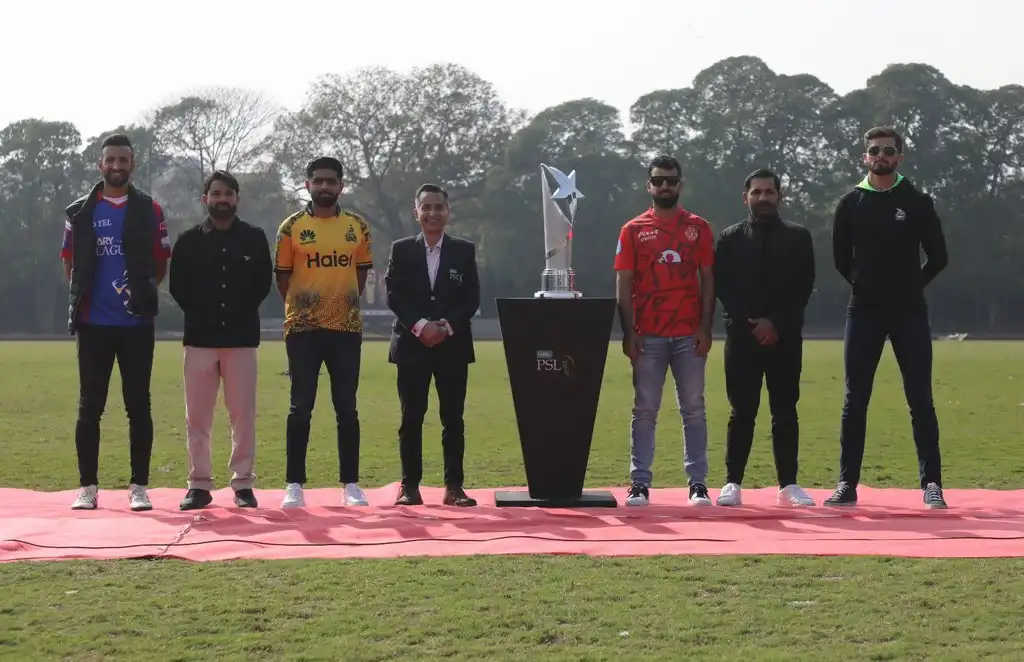
The Pakistan Cricket Board has started a roadshow in advance of the 2019 edition of the Pakistan Super League (PSL), which will add two new franchises to the current six clubs as part of its growth plans. On January 8, the franchise rights for the new teams will be given away at an auction in Islamabad. The second leg of the roadshow is now taking place at the Plaza Hotel’s Oak Room.
All PSL franchises are now owned by Pakistani individuals or groups. To increase the league’s worldwide presence, two new teams have been added in an effort to draw in foreign investment, especially from the Pakistani diaspora. PSL CEO Salman Naseer disclosed that although the site was initially reserved, organisers had to reschedule the pitch due to the high level of interest from possible investors. A few days prior, Lord’s Cricket Ground had hosted a comparable investor-focused event.
“Pakistan has been the main focus over the past ten years because we were attempting to revive international cricket in Pakistan, and the PSL was a tool for that.” The goal for the upcoming ten years is to make it a worldwide league. The majority of interest comes from Pakistanis living abroad who wish to reconnect, along with certain hedge funds and private equity firms who want to investigate more expansive prospects.
However, we are currently considering two teams and commercial rights’, the PSL CEO stated, as cited by Wisden.com.
“I believe that Pakistan is open for business, which is what we’re attempting to convey. Additionally, the narrative surrounding Pakistani cricket has evolved to emphasise thriving rather than survival, he continued.
Ten years ago, when the Indian Premier League (IPL) was already a major force in world cricket, the PSL was launched as a five-team competition. The first season’s matches were all held in the United Arab Emirates because to security concerns, and it took an additional five years for the league to be allowed to have a full edition in Pakistan.
“We need to make it the world’s greatest league. With international players and a sizable Pakistani diaspora outside of Pakistan, the goal was to have a global perspective if we wanted to make it the best in the world. We live in a country where cricket is practically a religion due to our intense devotion for the game. When you purchase a team, you become more than just a franchise owner—you become the most talked-about individual among 250 million people, according to Naseer.
Players from Pakistan do not play in the IPL, and the Pakistan Cricket Board’s (PCB) more stringent rules on No Objection Certificates (NOCs) have further reduced the chances for the nation’s top players to compete in foreign leagues. Even while the IPL is still the main entry point for the best international players, the PSL may benefit from its recently stricter rules against late withdrawals by international players, especially if the two leagues continue to play each other directly.
“In my opinion, it remains a more appealing alternative to the IPL. Our league’s distinctive selling feature is that it’s brief, delicious, peaks at the appropriate moment, and ends there, giving players a chance to compete instead of sitting on the sideline. If you look at it per match value instead of collective data, it offers reasonably good compensation, according to Naseer.
Although this month’s discussions in London and New York set lofty goals, the expansion is still based on a uniquely Pakistani product. The league’s ultimate success will be determined by its capacity to support Pakistan’s domestic cricket environment and act as a breeding ground for the nation’s future T20 talent.







 Home
Home