

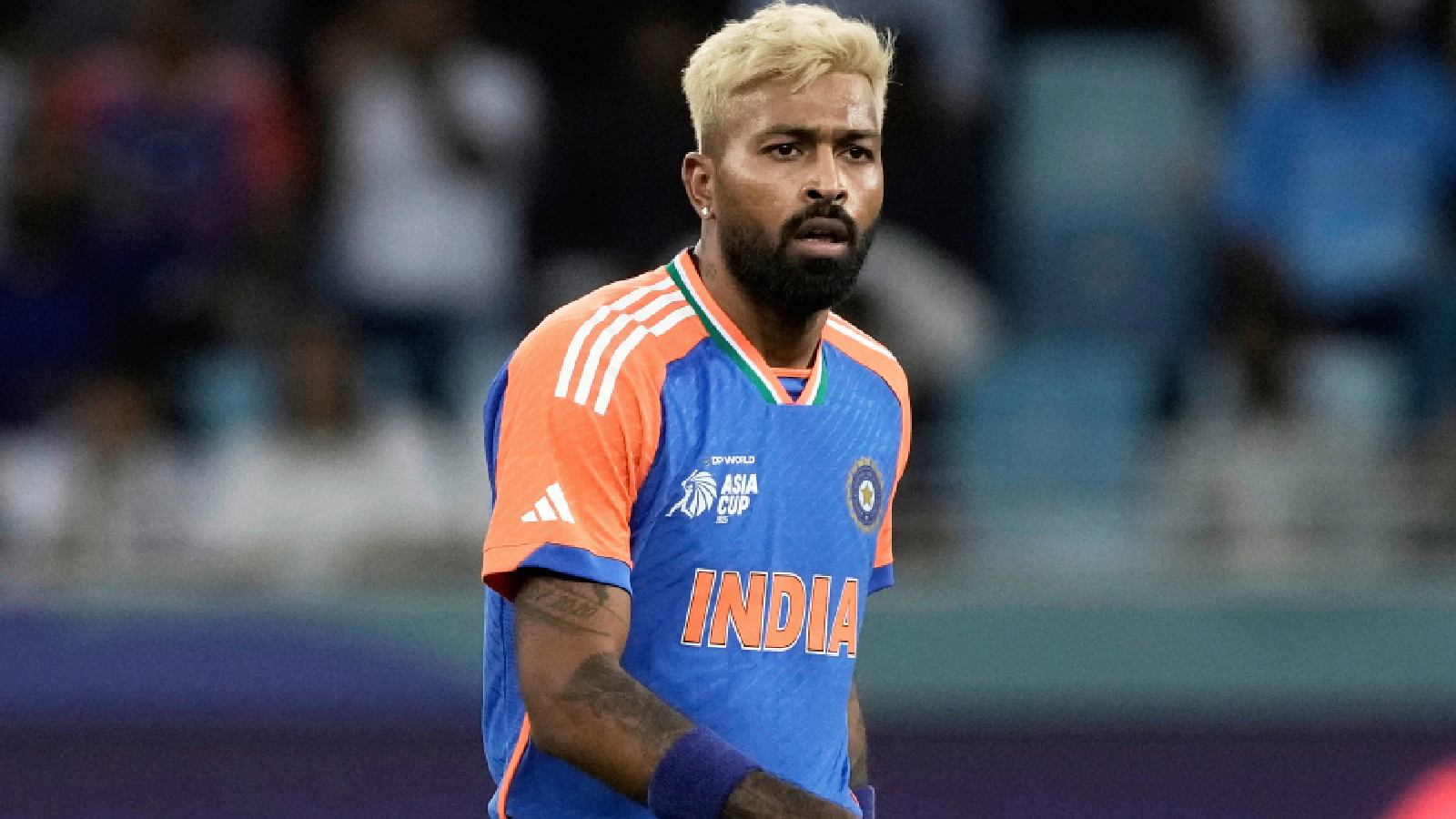
Hardik Pandya‘s role with the ball has been one of the main modifications made to India’s design during this exploratory period. In the middle overs, when Pandya’s adaptability and variety were tested, he unexpectedly turned to a barrage of slower balls of all lengths on a pitch that wasn’t very durable. Despite being struck for a couple of boundaries and a six, he did manage to deceive the batters a few times, particularly Quinton de Kock, who was in superb touch.
Just after Donovan Ferreira had leaped out and smashed Jasprit Bumrah for a six, Suryakumar Yadav’s eyes resignedly moved from the bleachers to the batter, hands folded and lips pressed and pushed out in recognition. For the fourth time in the innings, the pacer’s delivery was sent past the ropes, making a clear declaration of supremacy that made him smile incredulously. He had never been hit for so many sixes in a T20I inning before.
Just a few overs prior, his captain had responded to Arshdeep Singh’s tenth wide of the innings with a far more icy annoyance. Arshdeep gave up 54 runs during his session, which was his second-highest total in his T20I career to date.
For the Indian pace duo, who were transferred from the hot platform of Cuttack to the roads of Chandigarh in less than 48 hours, it was an exceptionally difficult day. They had some early movement and a slight steep bounce to help them, but their failure to capitalise on that ultimately hurt them and the team later in the innings when the dew set in and the South African batsmen suffered from the frequent mistakes in lengths and lines.
With their pacers smashing India’s top order by the fourth over, the visitors collected 213 for 4, solidifying South Africa’s lead in the match.
Two of India’s best T20I bowlers rarely appear in the same starting lineup. When they share duties, it is less likely that they would fail and India will lose. For the first time in 14 Twenty20 Internationals, India lost a match when they were playing together. In any case, they were open to some self-declared “explorations”; the promotion of Axar Patel to No. 3 in the big run-chase was a clear indication that they were getting ready for the T20 World Cup.
Hardik Pandya proved to be just as costly despite bowling far from full throttle, barely reaching the 134 kmph mark three times during his 18-ball performance.
With Hardik Pandya supporting Arshdeep and Bumrah, India’s speed attack is much more balanced on paper, even with the off day. If a partnership begins to develop in the middle phase, his overs ensure that the frontline tandem isn’t burned through too soon while also giving India a buffer in the last overs. India has a good opportunity of opening the game and gaining the early advantage if they contribute two overs each on the powerplay. In the middle overs, Pandya himself is useful as a hit-the-deck option.
With three pace bowling options that can function in all stages, India is now in a luxurious situation. However, doing so means excluding Kuldeep Yadav, who is currently playing well, from the starting lineup. The Suryakumar-led side’s organisational structure has changed very recently. The ideal blueprint is still far from being finalised, despite their desire to lock down the ideal combo early in their World Cup preparations.
on the first two games of the series, Hardik Pandya, who had contributed 32 overs over 20 innings on the powerplay since the beginning of 2024 and frequently began the game from one end for the side, has not been used in that capacity.
Even though Hardik Pandya only took six wickets during this phase, he was reasonably successful in controlling the pace of runs. The spin-heavy combination that India was using was more to blame for Pandya’s reasonable Powerplay and even death bowling responsibilities. However, a shift in the current series has forced him to return to the middle overs.
After the second Twenty20 International, India’s assistant coach Ryan ten Doeschate clarified, “We are playing two out and out seamers who are going to take the new ball for this series, and the conditions on offer.” Additionally, Varun [Chakaravarthy] has excelled at the powerplay’s back end. Using the appropriate tools at the appropriate moment is our goal. I suppose Surya suspected that Axar may be a threat in powerplay both in Cuttack and here tonight. It’s good to have an additional choice. Four of our bowlers are capable of bowling during the powerplay.
Despite the abundance of resources at their disposal, the loss on Thursday raises enough concerns to raise some doubts. The focus may be more on how long India wishes to continue testing this new combination than it is on Pandya, Arshdeep, and Bumrah’s individual performances.
Ten Doeschate said that the conditions call for at least three pace bowling options, but in recent months, India has grudgingly chosen to rely on their spin arsenal. In Johannesburg, Centurion, Hobart, Melbourne, and Hyderabad—all locations that encourage a heavier load from the pacers—the circumstances haven’t mattered.
Hardik Pandya role with the ball going into the World Cup will undoubtedly be determined by the potential of returning to more comfortable methods if India fails to produce the required results at the end of the series.








 Home
Home