

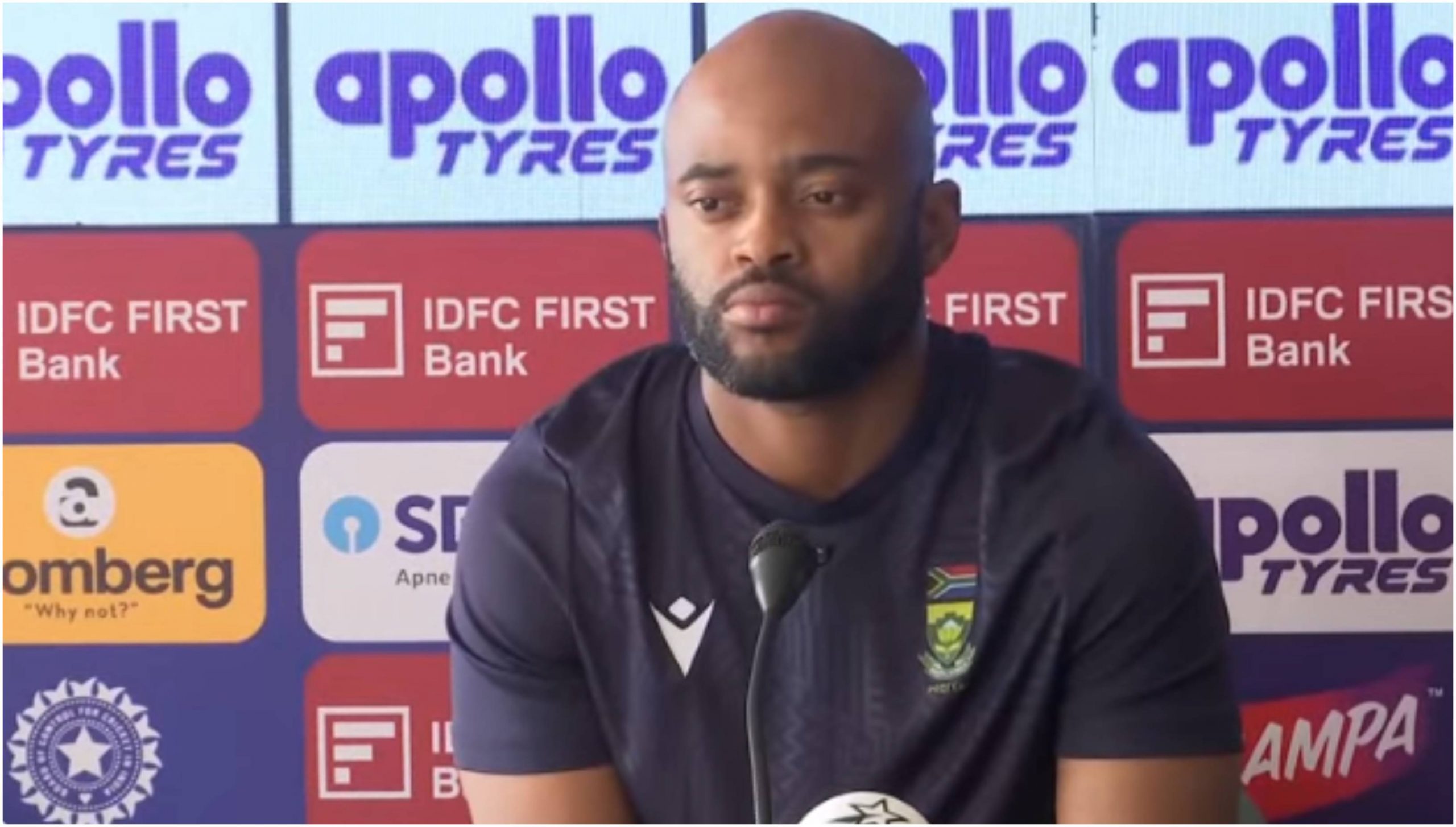
Though his batting position is still up in the air as the team continues to experiment with top-order combinations, Temba Bavuma is expected to return as captain of the South Africa ODI team against India in an attempt to tie the series. Due to Bavuma’s illness, the Proteas fielded Aiden Markram and Ryan Rickelton as a substitute opening combination, with Quinton de Kock starting at number three.
Given their solid record, South Africa might go back to the more seasoned and effective pairing of De Kock and Bavuma at the top with the series on the line. The De Kock-Bavuma combination has amassed almost 1,000 runs at an average of 56.42, making them the most likely stronger choice. Markram and Rickelton have opened in seven innings at an average of 43.71.
“I usually rank in the top three, so I’m flexible in any way that benefits the team as long as I’m still making a contribution. It’s about adding depth right now. Guys who typically bat at the top of their order have shown versatility by using the middle. A player like Matthew Breetzke, who usually sees himself at the top in one-day cricket, is performing admirably at No. 4 on this team. In Raipur, Bavuma stated, “A guy like Tony (de Zorzi) is getting that opportunity to bat at five,” according to ESPNcricinfo.
Due to the retirement of Heinrich Klaasen, the drop of Tristan Stubbs, and the unavailability of David Miller for this ODI team, South Africa has essentially put up a top five that includes five different opening batsmen, with Dewald Brevis ranking sixth. Rubin Hermann, the lone backup batter, has typically been in the top three during his List A career. “This strategy reflects their intent to prioritise experienced top-order players in the squad,” Bavuma explained.
“You always need that batsmanship element when you return to South Africa. Although smashing sixes in the middle order is very popular, you need to have some batsmanship. He has the traits of a guy like Tony.
I suppose his only goal now is to continue performing in order to defend his actions,” Bavuma remarked.
According to the Future Tours Programme (FTP), South Africa will only play nine ODIs following this series, all at home, with the 2027 ODI World Cup less than two years away. Although this could change, the Proteas are utilising the opportunity to experiment right now, which is exactly what they are doing with their current squad selections, as the FTP now only lasts until April 2027 and the World Cup is set for October.
These days, every game we play offers a significant lead-up chance. It’s about using the guys who have departed to fill in the voids. From a resource perspective in particular, we want to ensure that we have young players to cover for any situations in which one of our key bowlers is out. We observe people raising their hands, such as Nandre Burger. Therefore, adding depth and determining where men may play such responsibilities,” Bavuma stated.
Nandre Burger spearheaded South Africa’s bowling assault in the opening game, assisted by Ottneil Baartman, Corbin Bosch, and Marco Jansen, while Kagiso Rabada was unable to play in the series. Lungi Ngidi is also in the roster and is anticipated to play at some point, although the club seems to be leaning more towards using all-rounders right now.
Bosch and Jansen could hold onto their positions as the series goes on because they were instrumental in South Africa’s pursuit of 350 in Ranchi. In particular, Jansen has had a tremendous tour of India, solidifying his position as a key member of South Africa’s starting lineup in every format.
“Marco Jansen will undoubtedly be in the top 10 in either of those configurations, but I’m not sure where the standings stand. His contributions to our success, whether with the bat, the ball, or occasionally both, have been enormous. Although Marco is still a young man, he has played a lot of international cricket, is developing into his own person, and is getting more at ease with himself, Bavuma stated.






 Home
Home